
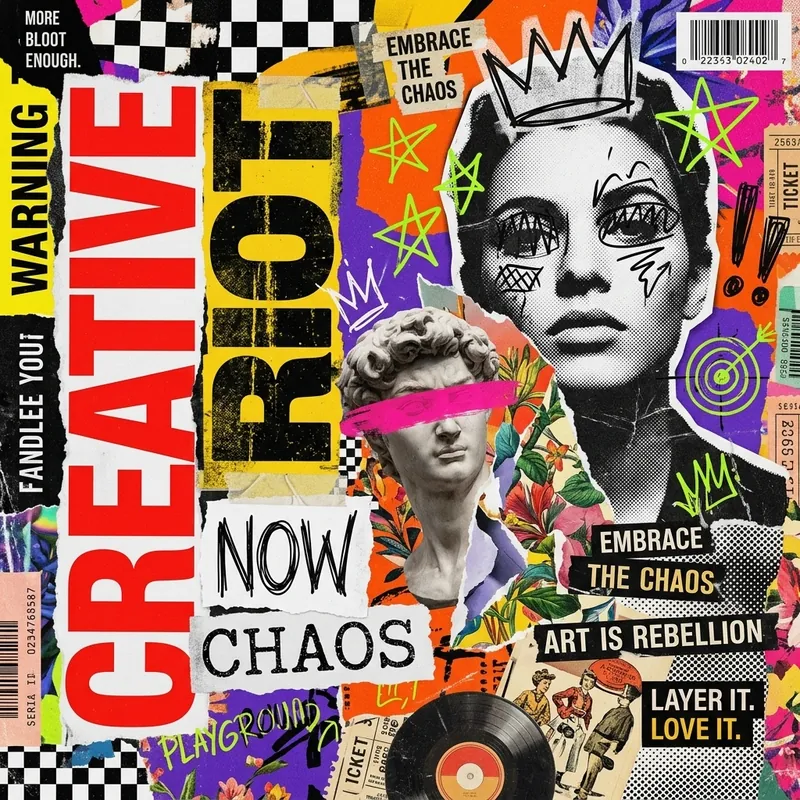
The polar opposite of minimalism: more color, more pattern, more texture, stacked on purpose rather than by accident. Maximalism trusts that a busy composition can still feel intentional and joyful rather than chaotic, when contrast and rhythm are controlled underneath the noise.
Key traits
- Layered
- Saturated
- Dense
Origins
Maximalism is less a single movement than a strategy of abundance. Historical interiors used dense ornament and collected objects to display wealth, religious authority, or status, and horror vacui, the fear of empty space, shaped Baroque and Rococo rooms. Victorian eclecticism layered furniture, textiles, and global references. The contemporary version gained momentum after the 2008 recession and the minimalism of the 2010s, with late-2010s and 2020s interiors emphasizing personal expression, nostalgia, and comfort.
Visual language
Maximalist composition rejects the single focal point. Patterns collide, colors overlap, collections fill shelves, and wallpaper, rugs, art, and objects compete for attention. The effect can be curated or chaotic, but it usually depends on repetition, layering, and a deliberate density rather than random clutter. Graphic work translates this into packed layouts, mixed typefaces, collage, ornamental repeats, and borders that refuse to stay empty.
Palette and type
Saturated color is common: hot pink, cobalt, orange, emerald, and yellow, often mixed with jewel tones and unexpected neutrals. Pattern is treated as a color field. Typography may combine contrasting families, heavy display faces, and ornamental capitals; consistency comes from repetition and framing rather than restraint.
What it signals
Maximalism signals personality, abundance, and a refusal of corporate restraint. It can feel joyful, autobiographical, and confident, or noisy and exhausting when there is no hierarchy.
Where it works
It works for fashion, beauty, hospitality, entertainment, packaging with collectible appeal, editorial spreads, and social campaigns built around self-expression. It is a poor fit for utility interfaces or brands that need calm.
Related styles
Sources
- Aesthetics Wiki — Maximalism accessed 2026-10-18