
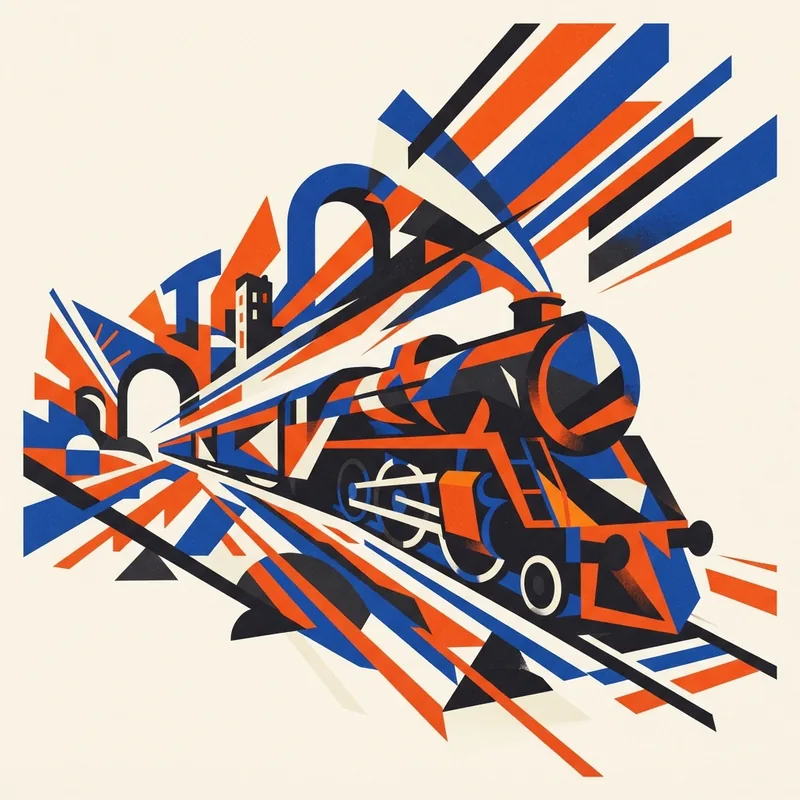
Futurism was an early 20th-century Italian avant-garde movement that celebrated speed, technology, and modernity through fragmented forms, rhythmic repetition, and vibrant colour.
Key traits
- Expressive
- High contrast
- Geometric
Palette
- #e63946
- #f4a261
- #1d3557
Origins
Futurism began in Milan in 1909 when Filippo Tommaso Marinetti published the Manifesto of Futurism. The movement rejected the past and glorified speed, technology, youth, and violence. It spread across painting, sculpture, design, and other arts, with key figures including Umberto Boccioni, Giacomo Balla, Carlo Carrà, and Gino Severini. It was politically charged and later associated with Italian Fascism.
Visual language
Futurist art uses fragmented shapes, rhythmic repetition, and blurred forms to convey dynamic movement. Lines of force and overlapping planes show objects interacting with their environment. Compositions are energetic and often asymmetric. Colour is bright and vibrant, drawing on Divisionism. Typography in manifestos and posters is bold and expressive, with free arrangement of words on the page.
Palette and type
Bright, saturated colours including reds, oranges, blues, and yellows dominate, with high contrast. Typography is bold, experimental, and often hand-lettered or set in dynamic, irregular arrangements that echo the movement's energy.
What it signals
Futurism communicates energy, speed, and technological optimism mixed with aggression and nationalism. It feels modern, restless, and confrontational, celebrating machines and urban life while rejecting tradition.
Where it works
Works well for dynamic posters, editorial layouts about technology or speed, and branding that needs an energetic, avant-garde edge. Overuse can feel aggressive or dated, and its political associations require care.
Related styles
Sources
- Futurism, Wikipedia accessed 2026-10-22
- Futurism, Aesthetics Wiki accessed 2026-10-22