
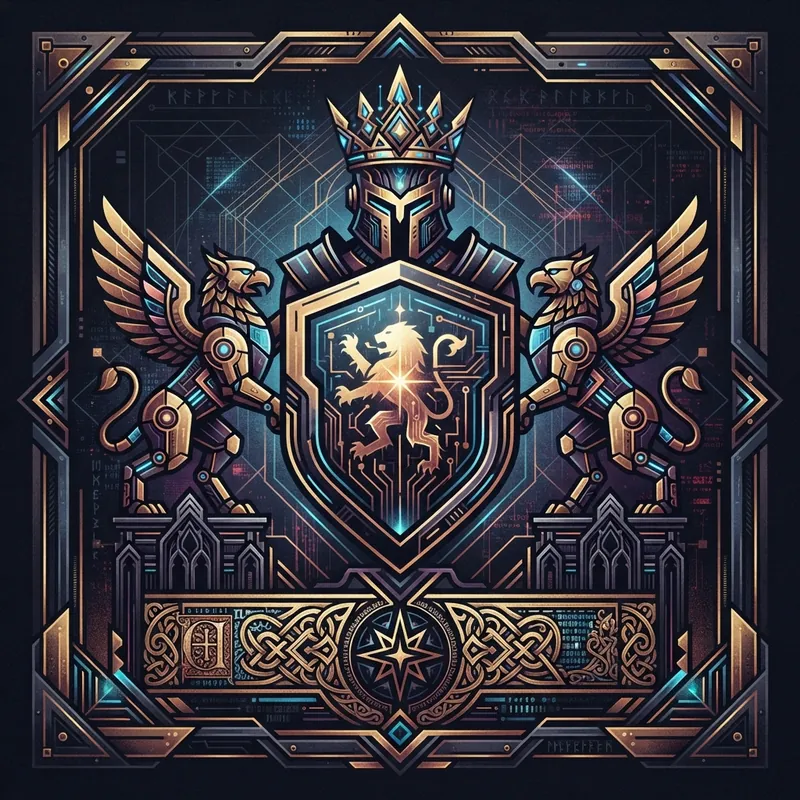
Heraldry and manuscript ornament reimagined with modern grids, glitch texture, and stark digital contrast.
Key traits
- Ornate
- Glitchy
- Digital
Origins
Future Medieval is a contemporary fusion style rather than a historical period. It takes the symbolism of medieval manuscripts, heraldry, armor, and religious art and rebuilds it with modern layout systems, digital textures, and a speculative tone. The result is deliberately unresolved: an illuminated crest or blackletter heading can sit inside a clean, contemporary grid, making the work feel both ancient and futuristic.
Visual language
Gothic typography, ornate borders, shields, crests, sigils, and mythical motifs provide the historical layer. Swords, beasts, saints, moons, and coded symbols add narrative weight. Digital grain, scan noise, glitch hints, and metallic finishes supply the future layer. Gold accents against dark grounds create ceremony, while clean spacing and modern grids keep the composition from becoming a pastiche.
Palette and type
Dark grounds, gold, silver, and bright highlights dominate. Black, charcoal, deep red, and bone white appear alongside metallic accents. Typography pairs blackletter or sharp high-contrast serifs with restrained modern sans serifs; the contrast between ornate display type and clean layout is the point.
What it signals
Future Medieval signals power, ceremony, and mythic seriousness. It can feel cinematic and authoritative, or game-like and costume-heavy when the heraldry has no clear hierarchy.
Where it works
It works for game and fantasy branding, music artwork, fashion, book covers, event posters, and merch with a ceremonial or speculative theme. It is too dramatic for ordinary corporate communication.
Related styles
Sources
- Kittl — Detailed visual guide accessed 2026-10-18