
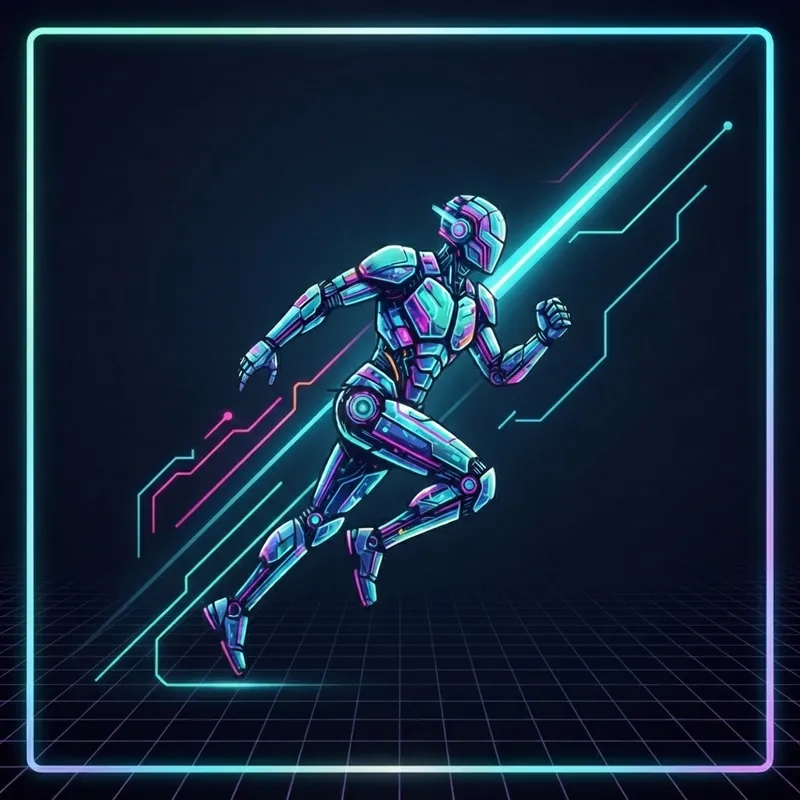
Circuit-board motifs, harsh drop shadows, and pop-up-window UI chrome — living inside a high-tech world.
Key traits
- Digital
- Metallic
- Layered
Origins
Cybercore is a revivalist internet aesthetic that took shape around 2020 on image-sharing platforms. It draws on the late-1990s and early-2000s web, anime, flip phones, and early digital interfaces, but filters them through a younger generation's nostalgia rather than reproducing the period directly. Its roots also reach back to 1980s cyberpunk and the glossy tech optimism of the internet boom.
Visual language
Neon-lit fields, circuit-board traces, scan lines, browser windows, cursors, and glitch artifacts sit beside angels, butterflies, hearts, and celestial bodies. Chrome and metallic surfaces catch colored light. Images are often collaged and overlaid, with soft glow and sharp digital edges in the same frame. The composition feels like a half-remembered interface or a dream of the early web.
Palette and type
Saturated blue and silver dominate, with white, pink, violet, and pastel accents. Glows and gradients are common. Typography mixes pixel and bitmap faces, chrome display type, wide-tracked techno sans, and fragments of interface labels; the type should feel native to a screen.
What it signals
Cybercore signals digital escapism, nostalgia, and a melancholy fascination with early online life. It can feel dreamy and futuristic, or overly referential when the Y2K signifiers are stacked without a mood.
Where it works
It works for gaming brands, festival posters, social campaigns, vision boards, music artwork, fashion, and edgy digital products. It is less suited to traditional corporate or heritage contexts.
Related styles
Sources
- Kittl — Detailed visual guide accessed 2026-10-18
- Aesthetics Wiki — Cybercore accessed 2026-10-18