
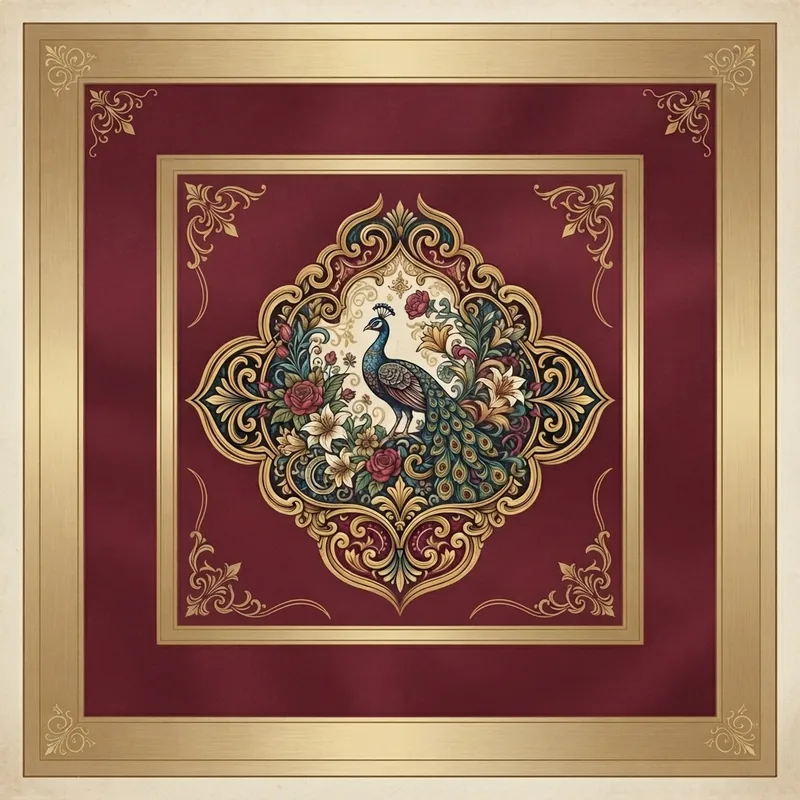
Densely ornamented: florals, crests, engraved type, and layered pattern that fills the space with intention.
Key traits
- Ornate
- Patterned
- Layered
Origins
Victorian design refers to the visual culture of Britain and its empire during Queen Victoria's reign, from 1837 to 1901. Industrial production expanded the range of printed and decorative goods, while Gothic Revival architecture and historicist ornament filled domestic interiors. The period's love of collection, display, and moral instruction produced dense patterns, elaborate lettering, and a mixture of styles rather than one unified look.
Visual language
Victorian layouts are ornament-first: framed borders, filled corners, floral sprays, damask repeats, lace-like edges, and layered decorative type. Roses, vines, bouquets, crests, cameos, and monograms supply the symbolism. Engraved linework and letterpress-like texture add age. The composition can be symmetrical and formal, or deliberately crowded; the guiding principle is abundance with craft, not empty space.
Palette and type
Deep jewel tones such as emerald, ruby, sapphire, and plum sit beside ochre, russet, taupe, black, and cream. Antique gold and brass provide accents. Typography favors calligraphic scripts, engraved serifs, and high-contrast display faces; monograms and ornamental capitals are common.
What it signals
Victorian signals heritage, craftsmanship, sentiment, and a slightly dark romanticism. It can feel opulent and storybook-like, or heavy and nostalgic when every surface is filled.
Where it works
It works for event invitations, heritage branding, book covers, packaging for tea or spirits, theater posters, and steampunk-adjacent projects. Use it where detail rewards close reading; it is a poor fit for dense interfaces.
Related styles
Sources
- Kittl — Detailed visual guide accessed 2026-10-18
- Aesthetics Wiki — Victorian accessed 2026-10-18