
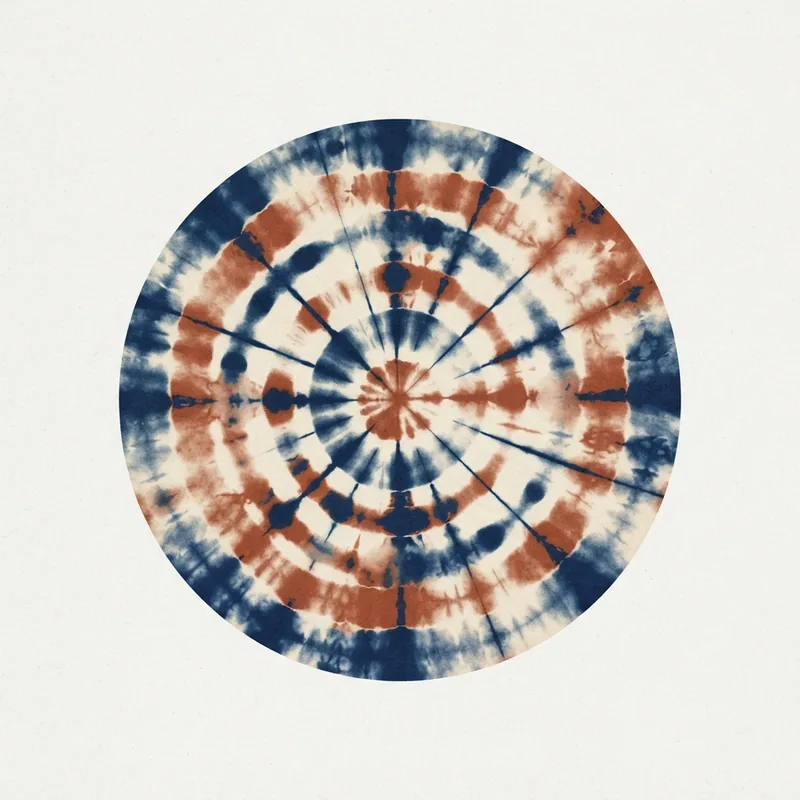
A resist-dyeing style where fabric is folded, twisted, or bound before dyeing, producing bold spirals, mandalas, and mottled color fields. Often associated with 1960s and 1970s counterculture, now revived in softer, more refined forms.
Key traits
- Patterned
- Textured
- Expressive
Palette
- #e63946
- #f4a261
- #2a9d8f
Origins
Tie-dye describes a family of resist dyeing techniques and the goods they produce. Fabric is folded, twisted, pleated, or crumpled, then bound with string or rubber bands before dye is applied. The bindings act as resists, blocking dye from reaching parts of the cloth. Modern tie-dye is commonly associated with the 1960s and 1970s counterculture, though the underlying resist methods are older and broader. Shibori is a related Japanese resist tradition.
Visual language
The look comes from the resist: bound or folded cloth leaves rings, spirals, radiating mandalas, stripes, and irregular mottled fields where dye could not reach. Edges are soft and bleeding rather than crisp. Bold patterns such as spirals, mandalas, and peace signs recur in mass-produced versions. In the 21st century, simpler motifs and monochromatic schemes appear, with an emphasis on fashionable garments and fabrics beyond cotton. Typography is rarely intrinsic, so the pattern usually carries the visual message.
Palette and type
Classic versions use bright, saturated primary colors in high-contrast combinations. Contemporary and refined versions favor monochromatic schemes and simple motifs. Dye choice affects the result: fiber-reactive dyes suit cotton, hemp, rayon, and linen, while acid dyes suit silk, wool, feathers, and nylon. Type, when present, is secondary to the dyed surface.
What it signals
The style signals handmade process, spontaneity, and countercultural nostalgia. Bold multicolor spirals read as 1960s and 1970s rebellion and festival culture. Softer monochromatic versions read as craft, artisanal fashion, and considered experimentation rather than commodity production.
Where it works
Works well for apparel, textiles, posters, packaging, and brand accents that need a handmade, expressive surface. It suits music and festival contexts and craft-led products. Overuse risks looking like generic festival merchandise, so restraint helps when the goal is a refined or premium feel.
Related styles
Sources
- Tie-dye, Wikipedia accessed 2026-10-23