
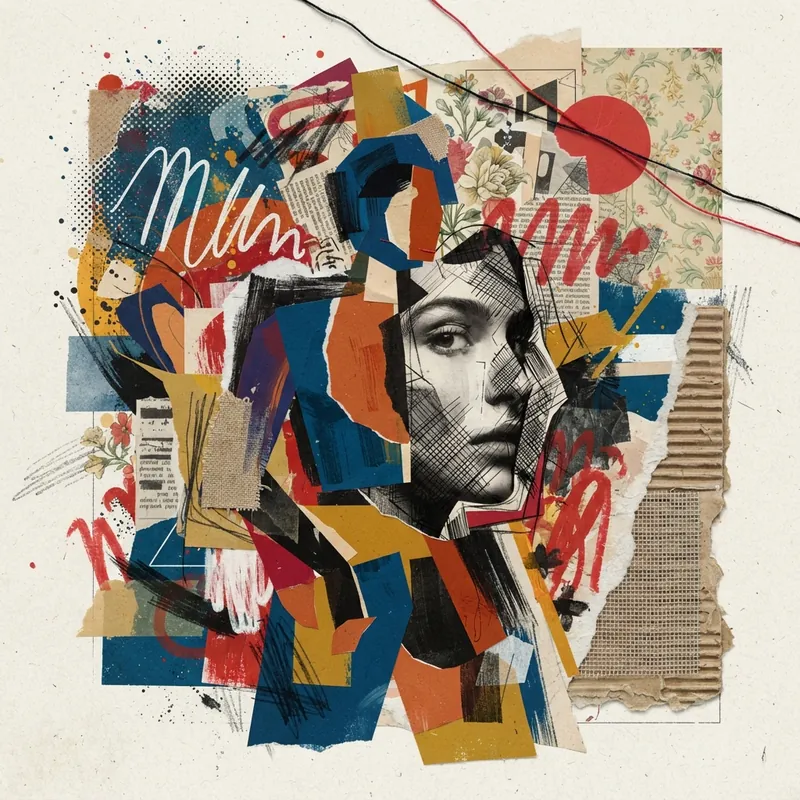
Painting, photography, and scrap materials layered into one eclectic, unexpected composition.
Key traits
- Collage
- Layered
- Eclectic
Origins
Mixed media combines different materials and image sources in one composition. Painting, photography, printed paper, fabric, and found objects can sit together, with collage and layering as the organizing method. Artists have worked across media for centuries, but the approach surged in the late twentieth century and became a common language for magazine spreads, album covers, and advertising.
Visual language
The style is built from juxtaposition: a photograph next to a painted gesture, a torn label over a portrait, or a flat graphic against a textured surface. Layers may be visible at the edges, and scale shifts are common. The composition can be dense or sparse, but it should feel assembled rather than seamless. Texture, edges, and interruptions carry much of the meaning.
Palette and type
Palettes vary with the source materials. Muted grounds with one saturated accent are common, as are faded print colors and raw paper tones. Typography may be cut out, hand-lettered, or mixed with found type, so consistency comes from the collage logic rather than a single font family.
What it signals
Mixed media signals experimentation, eclecticism, and tactile memory. It can feel layered and expressive, or chaotic when the juxtapositions have no clear intent.
Where it works
It works for magazine spreads, album covers, advertising campaigns, editorial illustration, posters, and packaging. It is less suited to clean, utility-first interfaces or strict corporate systems.
Related styles
Sources
- Kittl — Detailed visual guide accessed 2026-10-18