
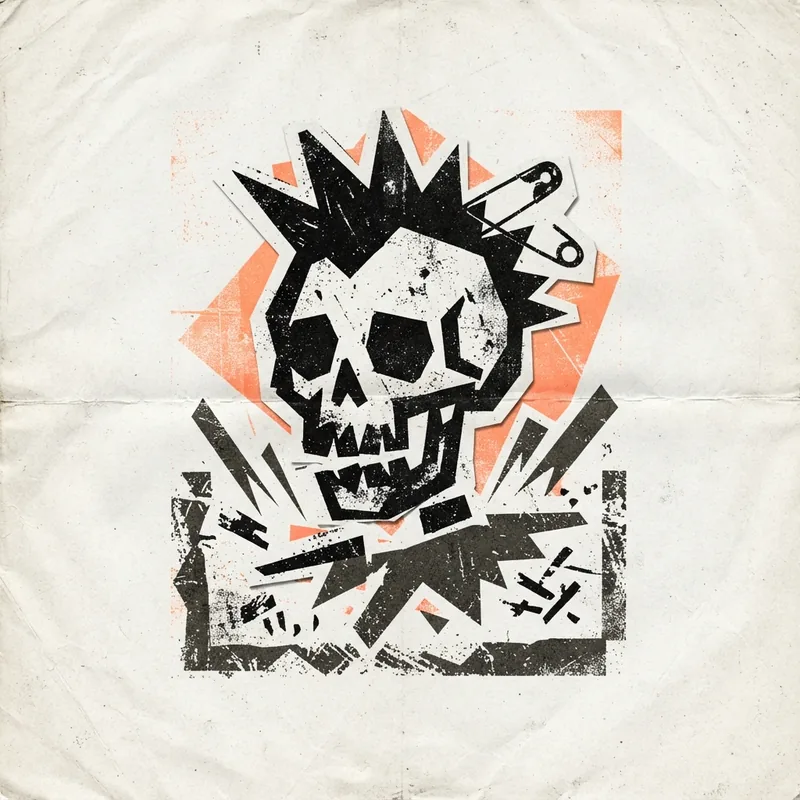
A self-published, photocopied print style built from punk DIY culture and copier-machine quirks: harsh black and white, cut-and-paste layout, degraded toner, and raw, handmade texture.
Key traits
- Textured
- High contrast
- Rebellious
Palette
- #111111
- #f2f2f2
- #8a8a8a
Origins
Photocopy zines grew out of the punk underground press of the 1970s. Early punk publications such as Punk in New York and Sniffin' Glue in London, whose first issue Mark Perry photocopied in 1976, established a cheap, amateur, do-it-yourself model. The office copier made publishing accessible, a point art librarian Judith Hoffberg framed by paraphrasing Marshall McLuhan: xerography made everyone a publisher.
Visual language
Pages are assembled by hand and reproduced on a photocopier, so composition tends toward cut-and-paste blocks, pasted type, clipped photos, and scribbled or handwritten additions. The machine's shallow focus and high contrast flatten objects into stark blacks and blown-out whites, with edges that smear, streak, or drop out. Repeated copying thickens and degrades toner, adding grain, speckle, and uneven density. Typography is often mixed, cheap, and urgent, from typewriter text to ransom-note lettering.
Palette and type
Palette is mostly copier black on white or cheap coloured paper, sometimes with one spot colour from a second pass. Type is deliberately unrefined: typewriter, hand-lettering, cut-out headlines, and mismatched sizes crowded together. Toner smudges and grey gradients stand in for shading.
What it signals
Signals raw urgency, independence, and a rebellious underground mood. The degraded, imperfect surface reads as honest and anti-corporate, communicating that the message matters more than polish. It suggests grassroots scenes, personal manifestos, and music subcultures.
Where it works
Works well for gig flyers, band merch, small-press covers, event posters, and editorial spreads about music or activism. Overuse risks looking like a costume of authenticity, and heavy degradation can hurt legibility at small sizes or on screen.
Related styles
Sources
- Punk zine, Wikipedia accessed 2026-10-23
- Xerox Art, Aesthetics Wiki accessed 2026-10-23