
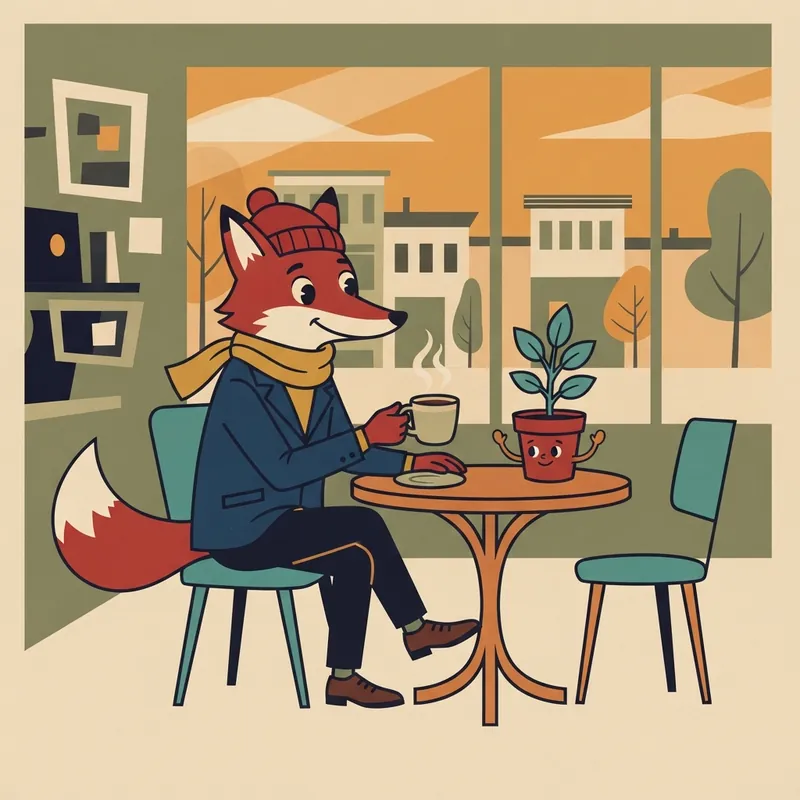
Animals or objects given human expressions and gestures — instantly memorable mascot logic.
Key traits
- Character-led
- Illustration-led
- Expressive
Origins
Anthropomorphic design gives animals, objects, or fantasy creatures human emotions, gestures, and social roles. The impulse is ancient, appearing in mythology and folklore where non-human figures carried human motives. It became a mass visual language through twentieth-century cartoons, animation, and advertising mascots, and it now appears in branding, children's publishing, packaging, and character-driven campaigns.
Visual language
The core move is embodiment: an animal or object stands upright, uses hands, wears clothes, or shows a recognizable facial expression. Eyes, brows, mouths, and posture do most of the emotional work. Characters often imply a small story through a prop, costume, or interaction. Simplicity and strong silhouettes make them readable at small sizes, while exaggerated expressions make them memorable.
Palette and type
Color follows the character rather than a fixed palette: warm, friendly tones for approachable brands, brighter accents for playful ones, and muted shades for nostalgic or editorial work. Typography usually supports the character with rounded sans serifs, friendly display faces, or hand-lettered wordmarks; it should not compete with the face.
What it signals
Anthropomorphic characters signal warmth, relatability, and personality. They make complex ideas easier to approach and give brands a memorable face, though they can feel childish or gimmicky when the character has no clear role.
Where it works
They work for mascots, packaging, children's media, editorial illustration, campaigns, and brands that need emotional connection. They are less suitable for technical, formal, or safety-critical communication.
Related styles
Sources
- Kittl — Detailed visual guide accessed 2026-10-18