
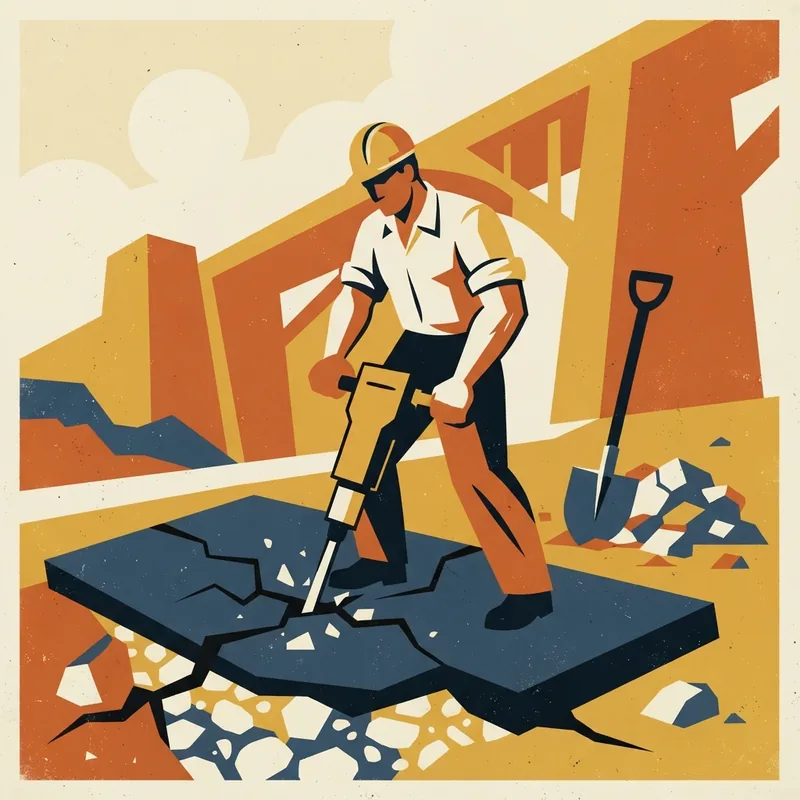
Public-relief posters from New Deal America, made by government-employed artists: bold flat shapes, strong lettering, and plain scenes of work, health, and civic life.
Key traits
- Flat
- Typography-led
- Narrative
Palette
- #a6402d
- #c99a3f
- #3f5d4a
Origins
The Federal Art Project ran from 1935 to 1943 as the visual arts arm of Federal Project Number One, a Works Progress Administration program funded under the Emergency Relief Appropriation Act of 1935. Under national director Holger Cahill it employed artists and craft workers as a relief measure during the Great Depression, producing posters alongside murals, prints, and paintings for schools, hospitals, and public buildings.
Visual language
WPA / Federal Art Project posters favor simple, readable compositions built from broad flat areas of color and clear silhouettes. Figures are sturdy and simplified, often shown working, learning, or using public services. Lettering is hand-drawn and poster-scale, frequently set in bold sans-serif capitals or clean geometric forms. Layouts stay centered and uncluttered, with limited depth and little ornament, so the message reads quickly from a distance.
Palette and type
Palettes lean on muted, earthy tones such as brick red, ochre, forest green, and slate blue, sometimes against cream or tan grounds. Type is typically bold, hand-lettered sans-serif capitals, stacked or arced for emphasis, with plain spacing and no decorative flourishes.
What it signals
The mood is earnest, civic, and optimistic about public effort. These posters communicate work, health, education, and community improvement, carrying a documentary, government-sponsored tone rather than a commercial one.
Where it works
Works well for cultural programming, public-service campaigns, museum exhibitions, and historical or civic-minded branding. It can feel dated or overly institutional if used for luxury or youth products, and heavy imitation risks looking like costume rather than design.
Related styles
Sources
- Federal Art Project, Wikipedia accessed 2026-10-22
- Flat Design, Aesthetics Wiki accessed 2026-10-22